

Starting A Food Business in India
Starting a Food Business in India involves choosing the right business structure, understanding food safety requirements, arranging applicable registrations and planning daily operations. My Startup Solution helps entrepreneurs organise the setup process, identify required registrations and prepare for a compliant food business launch.
Whats Included
- ✓ Food business setup and requirement assessment
- ✓ FSSAI registration/licensing guidance
- ✓ Business registration and documentation support
- ✓ Compliance and registration planning
Get Free Expert Consultation
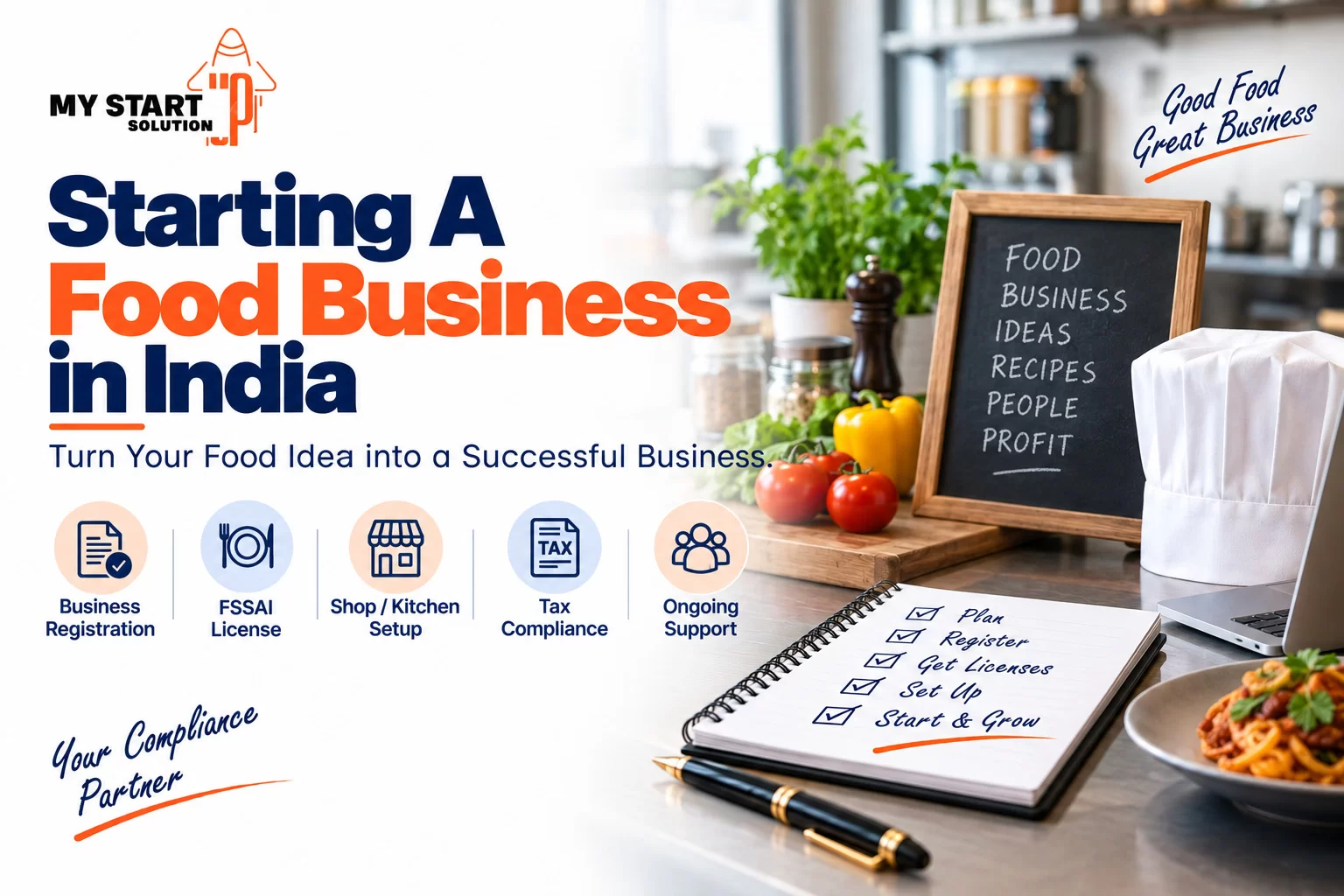
Starting A Food Business in India
The setup requirements can vary depending on the type of food business, business structure, location, activities and scale of operations. Food businesses are subjec...
Starting a Food Business in India can involve more than selecting a menu and finding a location. Whether you want to open a restaurant, cloud kitchen, bakery, café, food manufacturing unit, catering business, packaged food brand or food delivery venture, proper planning can help you organise the business from the beginning.
The setup requirements can vary depending on the type of food business, business structure, location, activities and scale of operations. Food businesses are subject to applicable food safety requirements, and FSSAI registration or licensing is an important part of the setup process. Applications and related food-business services are handled through the FSSAI FoSCoS system.
My Startup Solution provides practical guidance for entrepreneurs who need support with business setup, registrations and compliance planning before starting operations.
What Does Starting a Food Business in India Involve?
Starting a food business generally requires planning several areas together rather than treating each registration separately.
Depending on the proposed business, the setup may involve:
- Selecting a suitable business structure
- Planning the nature and activities of the food business
- Identifying applicable FSSAI registration or licence requirements
- Preparing business and registration documents
- Understanding GST requirements, where applicable
- Checking local registrations, permissions or licences
- Planning food packaging and labelling requirements where relevant
- Organising basic accounting and compliance processes
- Preparing the business for online or offline food sales
The exact requirements depend on the business model and its operations. A small home-based food venture may have different requirements from a restaurant, manufacturer, wholesaler or food brand selling across multiple locations.
Choose the Right Food Business Model
Before applying for registrations, it is useful to clearly define what you plan to do.
Restaurant or Café
A restaurant or café may require planning for premises, food preparation, staff, hygiene, local permissions and applicable food-business registration or licensing.
Cloud Kitchen
A cloud kitchen operates primarily for food preparation and delivery. Entrepreneurs should consider the kitchen premises, food safety requirements, delivery model, applicable registrations and online ordering arrangements.
Bakery or Food Production
If you manufacture or process food products, the requirements can depend on the products, manufacturing activity, premises and scale of operation. Product categories and food-business activities should be correctly identified during the compliance process.
Catering Business
Catering businesses need to consider food preparation, storage, transportation, serving arrangements and the applicable registration or licence requirements.
Packaged Food Brand
A packaged food business may require additional attention to product information, packaging and labelling requirements along with the applicable food-business registration or licence.
FSSAI Registration or Licence
FSSAI regulates food safety in India, and food businesses are required to obtain the applicable registration or licence under the food safety framework.
The appropriate category depends on factors such as the nature of the food activity, premises and applicable eligibility conditions. FoSCoS is the FSSAI platform used for food-business registration and licensing services.
Professional assistance can help you:
- Identify the relevant food-business category
- Understand applicable registration or licence requirements
- Organise required information and documents
- Prepare the application correctly
- Track the application process
- Understand renewal or modification requirements
The objective is to ensure that the food business setup is planned around the applicable regulatory requirements rather than applying for registrations without first understanding the business activity.
Business Structure for a Food Startup
Choosing the appropriate business structure is another important part of starting a food business.
Depending on the founders, ownership arrangement and business plans, an entrepreneur may consider structures such as:
- Sole proprietorship
- Partnership firm
- Limited Liability Partnership (LLP)
- Private Limited Company
- Other applicable structures
The choice can affect registration, taxation, accounting, ownership and future business requirements. My Startup Solution can help entrepreneurs understand the setup considerations and documentation involved in establishing the business structure.
GST and Other Registrations
GST registration may apply depending on the nature and circumstances of the business. It should not be treated as an automatic requirement for every food business without checking the applicable rules.
Other registrations or permissions may also depend on the location and type of operation. For example, a food outlet may have local requirements that differ from those of a packaged food manufacturer or an online food business.
A proper business setup review can help identify registrations that may be relevant to the proposed operations.
Documents and Information for Food Business Setup
The documents required can vary depending on the registration, business structure and type of food activity.
Common information may include:
- PAN and identity documents of the proprietor, partners or directors
- Address and premises details
- Business constitution documents
- Proof of business or premises address
- Food-business activity details
- Product or menu information, where applicable
- Bank or business information, where required
- Photographs or supporting documents, depending on the application
Additional documents may be required for specific food activities or licences.
Food Business Compliance Planning
Getting registrations is only one part of running a food business. Entrepreneurs should also understand the compliance responsibilities that apply after starting operations.
Depending on the business, this may include:
- FSSAI renewal or modification
- Food safety and hygiene practices
- Applicable record keeping
- GST compliance, where applicable
- Accounting and tax compliance
- Product labelling requirements
- Business and local licence renewals
- Changes in premises, activities or business details
Planning these requirements early can make ongoing compliance easier to manage.
How My Startup Solution Helps
My Startup Solution supports entrepreneurs who are planning to start a food business in India and need help understanding the setup process.
The service can cover the initial business requirements, applicable registrations, documentation and compliance planning based on the proposed food-business model.
The general process includes:
1. Understand Your Business Plan
We first understand the proposed food business, such as a restaurant, cloud kitchen, bakery, catering business, food manufacturing unit or packaged food brand.
2. Identify Applicable Requirements
The business activity, location and operating model are reviewed to identify registrations, licences and compliance areas that may apply.
3. Prepare Documentation
The required information and supporting documents are organised according to the relevant applications.
4. Application and Setup Support
Assistance is provided with the relevant registration or compliance process so that the entrepreneur can move forward with a structured business setup.
Who Needs Food Business Startup Support?
This service can be useful for:
- First-time food entrepreneurs
- Restaurant owners
- Cloud kitchen founders
- Bakery and café owners
- Catering businesses
- Packaged food startups
- Home-based food businesses
- Food manufacturers and processors
- Entrepreneurs planning online food sales
- Existing food businesses adding new activities
Why Plan Your Food Business Setup Properly?
A food business can involve several registrations and operational requirements. Starting without understanding the applicable requirements may create avoidable compliance issues later.
A structured setup helps entrepreneurs understand what needs to be completed before operations, which registrations may apply and what information needs to be maintained as the business grows.
My Startup Solution focuses on practical business setup guidance so entrepreneurs can work through the registration and compliance requirements in an organised manner.
Start Your Food Business with the Right Setup
Starting a Food Business in India requires attention to business structure, food safety, registrations, documentation and ongoing compliance. The exact requirements depend on the proposed business model and operating conditions.
If you are planning a restaurant, cloud kitchen, bakery, catering service, food manufacturing unit or packaged food brand, professional guidance can help you understand the setup process and applicable requirements before you begin operations.
Basic Requirements for Starting a Food Business in India
- Business Owner: The applicant should have a clear business idea and decide whether the food business will operate as a proprietorship, partnership, LLP, or company.
- Food Business Activity: The proposed activity may include a restaurant, café, cloud kitchen, bakery, catering service, food manufacturing, packaged food, or other food-related operations.
- Food Safety Compliance: Food businesses generally need appropriate registration or licensing under applicable food safety regulations based on the nature and scale of the activity.
- Business Premises: The business should have a suitable place for preparing, storing, manufacturing, selling, or serving food, depending on the business model.
- Local Approvals: Depending on the location and activity, additional registrations, permissions, or local licences may be required.
- Tax and Business Compliance: The business structure and turnover can determine applicable tax registrations and ongoing compliance requirements.
Registration process
A simple four-step process, start to finish.
Choose the Business Structure
My Startup Solution helps you evaluate the nature, ownership, investment plans, and future growth of your food business before selecting the appropriate structure.Complete Business Registration
Register the selected business structure and obtain the relevant business identification and registration documents.Apply for Food-Related Licences
Identify and apply for the applicable food safety registration or licence based on the type and scale of your food business.Choose the Right Form of Business for Your Food Business
- Sole Proprietorship: Suitable for individuals starting a small food business such as a home kitchen, bakery, cloud kitchen, or food stall with simple ownership and management.
- Partnership Firm: A practical option when two or more people want to start and manage a food business together and share responsibilities and profits.
- LLP: Suitable for food businesses started by multiple partners who want a structured business setup with limited liability protection.
- Private Limited Company: A suitable structure for food startups planning expansion, multiple locations, external investment, or a scalable food brand.
- One Person Company: An option for a single entrepreneur who wants to operate through a corporate business structure while maintaining individual ownership.
