

Starting Manufacturing Business
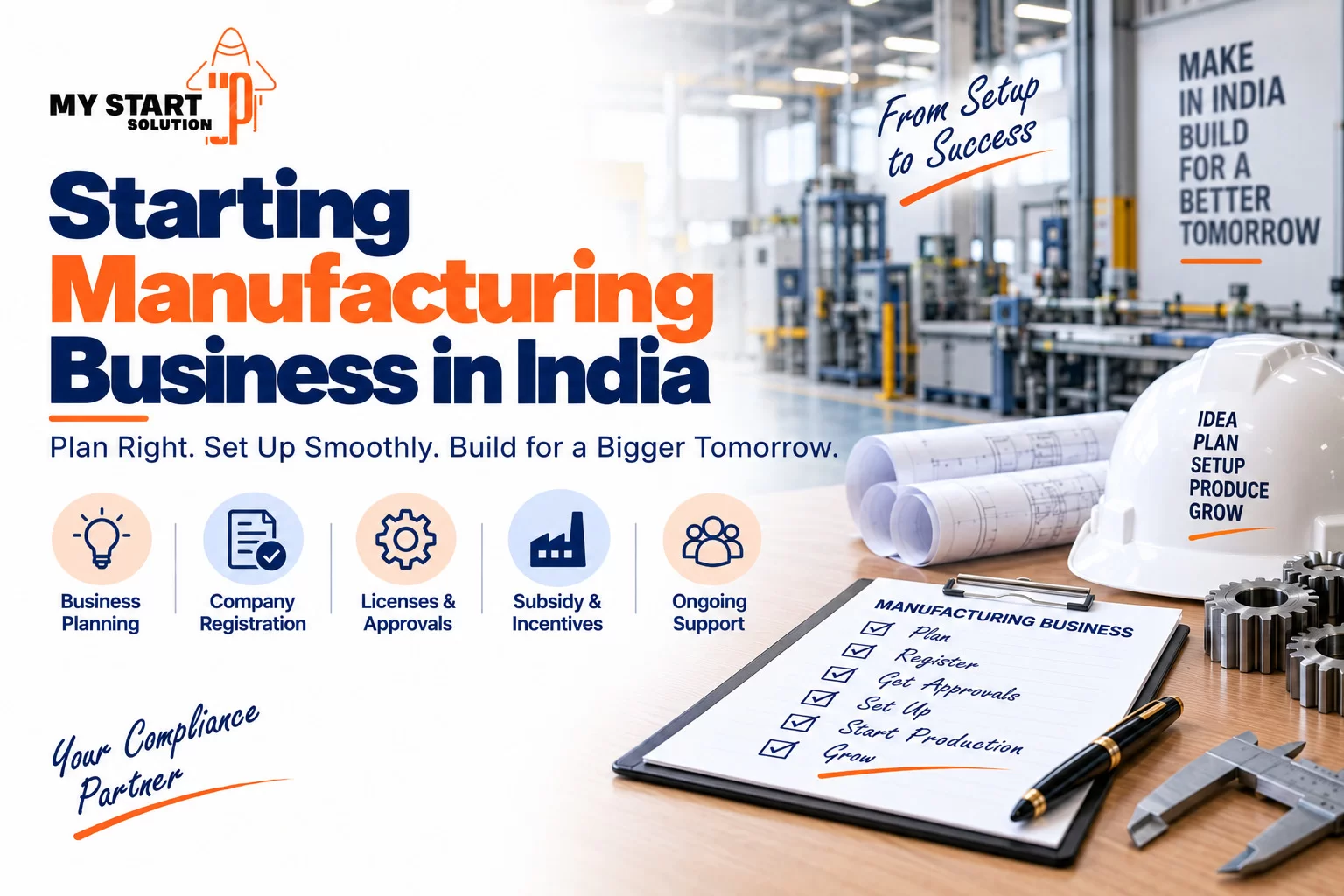
Starting a Manufacturing Business in India involves choosing the right business structure, understanding applicable registrations, planning compliance, and setting up operations. This service is useful for entrepreneurs and businesses planning a new manufacturing unit and needing professional guidance through the setup process.
Whats Included
- ✓ Business structure and registration guidance
- ✓ Manufacturing business documentation assistance
- ✓ Applicable licence and registration requirement assessment
- ✓ Tax and statutory compliance guidance
Get Free Expert Consultation
Starting Manufacturing Business
The exact requirements can vary depending on the product, location, manufacturing process, business structure, workforce, and scale of...
Starting a manufacturing business in India requires more than selecting a product and arranging production facilities. Entrepreneurs need to plan the business structure, identify applicable registrations and licenses, understand tax requirements, arrange documentation, and consider operational and regulatory requirements before beginning commercial activities.
The exact requirements can vary depending on the product, location, manufacturing process, business structure, workforce, and scale of operations. My Startup Solution helps entrepreneurs understand these requirements and organize the business setup process according to their proposed manufacturing activity.
What Does Starting a Manufacturing Business Involve?
A manufacturing business converts raw materials, components, or other inputs into finished or semi-finished products. Depending on the industry, the business may operate from a small workshop, industrial premises, factory, or specialized production facility. Before starting operations, entrepreneurs generally need to work through areas such as:
- Selecting an appropriate business structure
- Choosing and finalizing the business activity
- Registering the business entity, where applicable
- Obtaining applicable tax registrations
- Checking local business and trade requirements
- Understanding factory-related compliance where applicable
- Reviewing environmental requirements based on the activity
- Planning employee and labour-related registrations where applicable
- Setting up accounting and statutory compliance systems
- Preparing required business and registration documents
Not every manufacturing business requires the same approvals. Requirements should be assessed according to the specific product and manufacturing activity.
Who Can Use Manufacturing Business Setup Services?
This service can be useful for entrepreneurs who are planning to start a manufacturing unit or convert an existing business into a manufacturing operation.
It may be relevant for:
- First-time entrepreneurs
- Small and medium manufacturing businesses
- Product-based startups
- Family-owned manufacturing businesses
- Existing businesses adding a manufacturing unit
- Entrepreneurs planning to establish a factory
- Businesses expanding into a new manufacturing activity
Professional assistance can make the setup process easier to organize by identifying the documentation and compliance areas that may apply to the proposed business.
Key Steps to Start a Manufacturing Business
1. Select the Manufacturing Activity
The first step is to clearly define what the business will manufacture. The product category affects several aspects of the setup, including premises, equipment, taxation, environmental requirements, industry-specific permissions, and other compliance considerations. A clear description of the manufacturing activity also helps when preparing business registration and other official documentation.
2. Choose the Business Structure
Entrepreneurs can consider different structures depending on their ownership, investment plans, number of owners, and long-term objectives.
Common business structures may include:
- Proprietorship
- Partnership
- Limited Liability Partnership
- Private Limited Company
- One Person Company
The appropriate structure depends on the individual business situation. Professional guidance can help entrepreneurs understand the basic compliance and documentation requirements associated with each option.
3. Register the Business
Once the business structure is decided, the applicable registration process can be initiated. For companies and LLPs, registration is generally handled through the Ministry of Corporate Affairs framework. The registration process may require identity documents, address details, business information, registered office details, and other supporting documents.
4. Review Tax and GST Requirements
Manufacturing businesses need to understand their applicable tax obligations. GST registration may be required depending on the nature and circumstances of the business. Tax compliance may also involve maintaining appropriate records, issuing compliant invoices, filing applicable returns, and keeping business transactions properly documented. The exact tax requirements should be evaluated according to the business structure, turnover, transactions, and nature of the products.
Licences and Approvals for Manufacturing Businesses
Manufacturing businesses may require different permissions depending on the product, premises, workforce, machinery, production process, and state or local requirements.
Depending on the activity, entrepreneurs may need to examine requirements related to:
- Factory-related registration or licensing
- Pollution control and environmental permissions
- Trade or local business permissions
- Fire safety requirements
- Labour and employee compliance
- Professional tax, where applicable
- Electricity and premises-related requirements
- Product-specific registrations or approvals
- Legal metrology requirements for applicable products
- Industry-specific permissions
It is important not to assume that every manufacturing business needs every licence. The applicable requirements should be identified based on the actual business activity and location.
Documents Generally Required
The documentation depends on the business structure and registrations being applied for. Common documents may include:
- PAN and identity documents of promoters
- Address proof
- Photographs, where required
- Business or company details
- Registered office or business premises proof
- Rent agreement or ownership documents, where applicable
- Utility bill or address verification documents
- Partnership or incorporation documents, where applicable
- Details of the proposed manufacturing activity
Additional documents may be required for specific licences, products, premises, or regulatory approvals.
Manufacturing Business Compliance
Starting the business is only the first stage. A manufacturing unit may also have ongoing compliance responsibilities after registration.
These can include maintaining accounting records, filing tax returns, completing applicable company or LLP compliances, maintaining employee records, renewing relevant licences, and meeting sector-specific requirements.
Manufacturing businesses should also maintain proper records relating to purchases, sales, inventory, production, expenses, payroll, and statutory payments as applicable to their business structure.
How My Startup Solution Can Help
My Startup Solution provides business setup assistance for entrepreneurs who need structured guidance while planning their manufacturing venture.
The support can cover areas such as:
- Understanding the basic business setup process
- Business structure and registration guidance
- Documentation assistance
- Identification of applicable registrations and compliance areas
- Support with tax and statutory registration requirements
- Guidance for maintaining ongoing compliance
The exact scope of work depends on the manufacturing activity, business structure, location, and registrations required.
Why Plan the Setup Before Starting Production?
A manufacturing business involves investment in premises, machinery, raw materials, employees, inventory, and other operational resources. Completing the relevant business and regulatory planning before commercial operations can help entrepreneurs organize these requirements more effectively.
It also helps identify whether additional permissions or industry-specific requirements may apply to the proposed manufacturing activity.
The requirements are not identical for every business, so a manufacturing setup should be assessed individually.
Get Guidance for Starting Your Manufacturing Business
Starting a Manufacturing Business in India can involve several administrative and compliance steps. Getting the requirements reviewed at the planning stage can help entrepreneurs understand what needs to be completed before and after starting operations.
My Startup Solution can assist businesses in organizing their setup requirements, preparing documentation, and understanding applicable registrations and compliance areas based on their proposed manufacturing activity.
If you are planning to establish a new manufacturing business, professional guidance can help you approach the registration and compliance process in a more structured manner.
Documents required
Documents Needed to Start a Manufacturing Business in India
Registration process
A simple four-step process, start to finish.
Understand Business Requirements
Review the proposed manufacturing activity, ownership, investment needs, number of founders, and expected business scale.Compare Business Structures
Evaluate proprietorship, partnership, LLP, OPC, and private limited company based on liability, compliance, management, and expansion plans.Select the Suitable Structure
Choose the form of business that matches the manufacturing unit’s ownership pattern, financial plans, and long-term objectives.Complete Business Registration
My Startup Solution can assist with the applicable registration process and help entrepreneurs move towards setting up their manufacturing business in India.Choose the Right Form of Business for Manufacturing
- Private Limited Company: Suitable for manufacturing businesses planning structured operations, multiple shareholders, investment, and future expansion.
- LLP: A practical option for partners who want limited liability with comparatively flexible management and ownership arrangements.
- Partnership Firm: Suitable for small manufacturing ventures operated by two or more partners under an agreed partnership structure.
- Sole Proprietorship: Can work for an individually owned small manufacturing unit where the business is managed and controlled by one person.
- One Person Company: An option for a single entrepreneur who wants to operate through a company structure while retaining individual ownership.
