

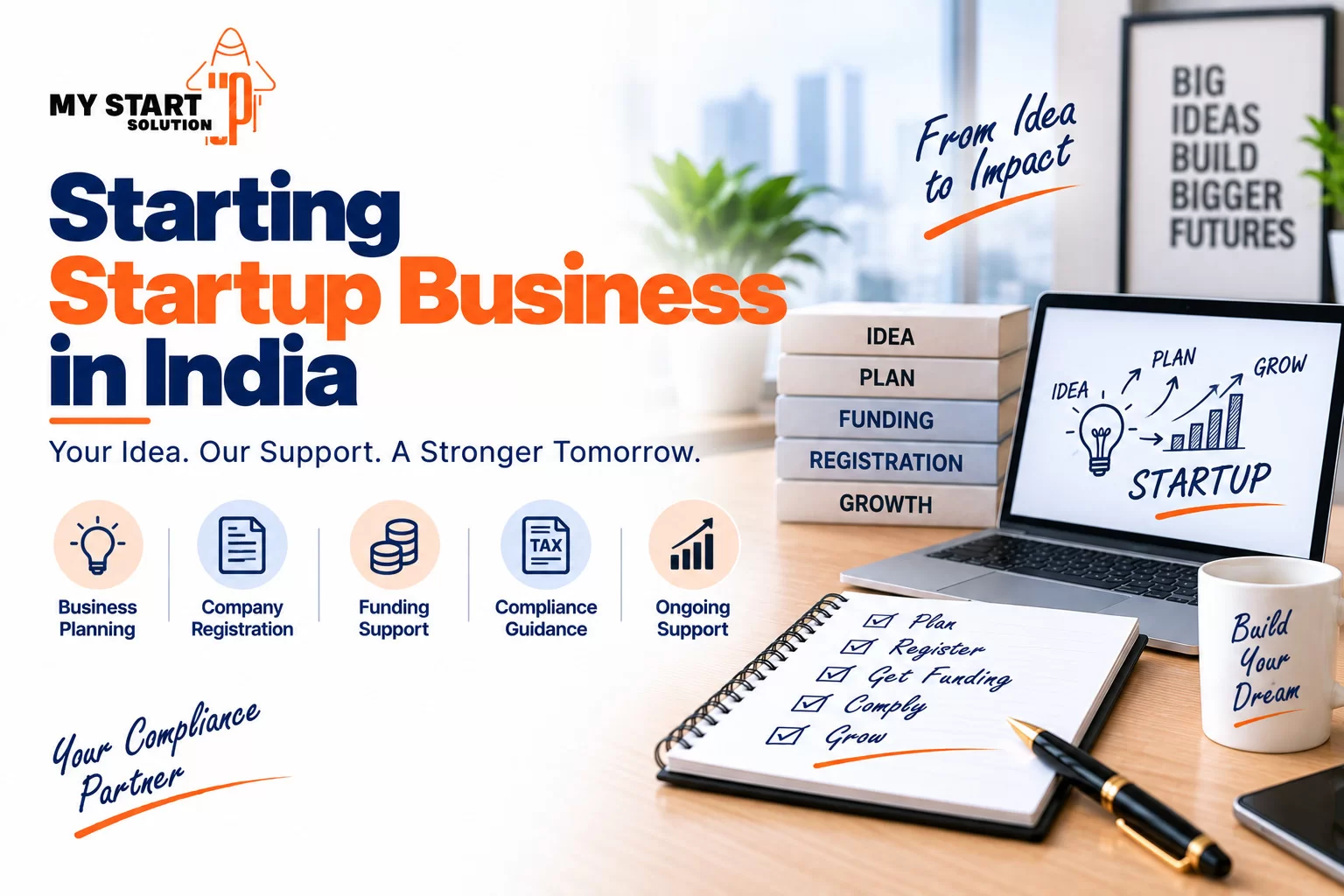
Starting Startup Business in India
Starting a startup business in India involves choosing the right business structure, completing registrations, and setting up basic compliance. My Startup Solution helps new entrepreneurs understand the setup process, prepare required documents, and complete essential registrations with practical professional guidance.
Whats Included
- ✓ Business structure and setup guidance
- ✓ Registration and documentation assistance
- ✓ Applicable licence and registration identification
- ✓ Basic post-registration compliance guidance
Get Free Expert Consultation
Starting Startup Business in India
The right setup can make it easier to manage business activities, maintain records, handle taxes, open a business bank account, and meet applicable compliance requirements. The exact requirements depend on t...
Starting a startup business in India requires more than just having a good business idea. Entrepreneurs need to choose a suitable business structure, understand registration requirements, arrange documents, and complete the necessary legal and tax registrations before starting operations.
The right setup can make it easier to manage business activities, maintain records, handle taxes, open a business bank account, and meet applicable compliance requirements. The exact requirements depend on the nature, size, ownership, and activities of the proposed business.
My Startup Solution provides professional support for entrepreneurs who want to understand the process of setting up a new business in India and complete the required registrations in an organized manner.
Who Needs Startup Business Setup Assistance?
Startup business setup services can be useful for individuals and groups planning to start a new venture in India. This may include:
- First-time entrepreneurs
- Small business owners
- Technology and service startups
- Online businesses and e-commerce ventures
- Professionals starting a new business
- Founders planning to operate through a company or LLP
- Entrepreneurs looking to formalize an existing business
Professional assistance can help founders understand which registrations may apply to their business and what documents need to be prepared.
Choose the Right Business Structure
One of the first decisions when starting a startup business in India is selecting an appropriate business structure. Common options include:
Sole Proprietorship
A proprietorship can be suitable for certain businesses operated by a single individual. It generally has a simpler structure, but the business and owner are not separate legal entities.
Partnership Firm
A partnership may be considered when two or more individuals plan to operate a business together under an agreed partnership arrangement.
Limited Liability Partnership
An LLP combines elements of partnership management with limited liability for its partners, subject to applicable laws and requirements.
Private Limited Company
A private limited company is a separate legal entity and is commonly considered by founders who plan to build a structured business, bring in investors, or operate with multiple shareholders.
One Person Company
An OPC may be considered by an eligible individual who wants to operate through a corporate structure while having a single member, subject to applicable legal requirements. The appropriate structure depends on factors such as ownership, business activity, liability, investment plans, compliance requirements, and future business goals.
Important Registrations for a New Startup
Not every startup requires the same registrations. Depending on the business activity and structure, some registrations or approvals may be applicable.
These may include:
- Business entity registration
- PAN and TAN, where applicable
- GST registration, when applicable
- Shops and Establishment registration, depending on the state and business requirements
- Professional Tax registration, where applicable
- MSME/Udyam registration, if eligible
- FSSAI registration or licence for applicable food businesses
- Import Export Code for eligible import or export activities
- Sector-specific licences or approvals
The requirement should be checked according to the actual business activity rather than applying the same registrations to every startup.
Startup India Registration and Recognition
Eligible businesses may also consider Startup India recognition through the relevant government process. Startup recognition is different from basic business registration and has its own eligibility conditions and documentation requirements.
Entrepreneurs interested in Startup India recognition should first understand whether their proposed or existing entity meets the applicable criteria. Professional guidance can help with understanding the process, preparing information, and submitting the required application.
Documents Generally Required
The documents required for starting a business depend on the selected structure and registration. Common information and documents may include:
- PAN and identity proof of founders or promoters
- Address proof
- Passport-size photographs, where required
- Registered office or business address proof
- Rental agreement or ownership documents, where applicable
- Utility bill or other address-related documents
- Business activity details
- Proposed business or company information
- Digital Signature Certificate, where required
- Details of directors, partners, or authorized persons
Additional documents may be required for specific registrations or regulated business activities.
How the Startup Business Setup Process Works
1. Understand the Business
The first step is to understand the proposed business activity, ownership, location, and operational requirements.
2. Select the Business Structure
The entrepreneur can evaluate suitable structures such as proprietorship, partnership, LLP, OPC, or private limited company based on the business requirements.
3. Prepare Documents
The required identity, address, business, and ownership documents are collected and checked according to the selected registration.
4. Complete Applicable Registrations
Applications are prepared and submitted through the relevant government or regulatory platforms. The exact process varies according to the registration.
5. Set Up Basic Compliance
After registration, the business may need to maintain records and complete applicable tax, accounting, labour, licensing, or other compliance requirements.
Why Professional Startup Assistance Can Help
Starting a business can involve multiple decisions and registrations. Entrepreneurs may find it difficult to determine which requirements apply to their particular business. Professional assistance can help with:
- Understanding the business setup process
- Selecting a suitable business structure
- Preparing registration-related documents
- Identifying applicable registrations
- Organizing application information
- Understanding basic post-registration compliance
- Avoiding common documentation errors
My Startup Solution helps entrepreneurs approach business setup in a structured way, with support based on their business activity and registration requirements.
Start Your Business With a Proper Setup
A clear business setup gives entrepreneurs a practical foundation for starting operations. Before applying for registrations, it is useful to understand the business structure, required documents, applicable licences, tax requirements, and ongoing compliance responsibilities.
If you are planning on starting a startup business in India, professional guidance can help you understand the registration process and identify the requirements relevant to your business. The right approach depends on your specific business model, ownership, location, and activities.
My Startup Solution can assist entrepreneurs with business setup and related registration requirements, helping them understand the steps involved before they begin their business operations.
Important: Registration, tax, licensing, and compliance requirements can vary depending on the business activity, state, entity structure, and applicable laws. Requirements should be checked for the specific business before proceeding.
Eligibility for Starting a Startup Business in India
- Business Founder: The entrepreneur should identify the business idea, ownership structure, and nature of activities before selecting the appropriate business form.
- Number of Owners: The suitable registration option depends on whether the startup has one owner, multiple founders, or a group of partners.
- Business Activity: The proposed business activity should be checked to determine whether any specific registration, licence, or regulatory approval is required.
- Registered Office: The startup generally needs a valid address for official registration and business correspondence.
- Identity Documents: Founders, directors, or partners need the applicable identity and address documents for registration.
- Legal Compliance: The proposed structure should meet the applicable legal and regulatory requirements for its business activities.
Registration process
A simple four-step process, start to finish.
Understand the Business Idea
My Startup Solution helps assess the nature, ownership, and future plans of the startup before choosing the appropriate business structure.Choose Business Structure
Select between options such as proprietorship, partnership, LLP, OPC, or private limited company based on ownership and business requirements.Prepare Documents
Collect the required identity, address, registered office, and business-related documents applicable to the selected structure.Complete Registration
Submit the required application and complete the applicable registration, followed by necessary tax, licence, or compliance registrations based on the business activity.Choose the Right Form of Business for Your Startup
- Sole Proprietorship: Suitable for individuals starting a small business with simple ownership and management requirements.
- Partnership Firm: A practical option when two or more people want to start a business together and share responsibilities and profits.
- LLP: Suitable for startups that want partnership-based management along with limited liability protection.
- Private Limited Company: Often considered by startups planning structured operations, multiple shareholders, investment, or future business expansion.
- One Person Company: An option for a single entrepreneur who wants to operate through a corporate business structure.
- Section 8 Company: Suitable for organisations established for charitable, social, or non-profit objectives rather than regular commercial activities.
